
The end is not the end
A portrait of a woman between endings

‘Choose the fabric you like’, a woman with bright red locks in a white jumpsuit—a sort of funky angel with fire for her hair—tells me and leads me to a table with bits of gorgeous fabric spread on it. Each piece is soft and silky. It feels pleasant to touch. I can imagine a dress made out of this fabric. I can imagine it would look rather sexy.
It’s been a while since I felt sexy, and it’s been a while since I’ve wanted to touch anything or wanted anything to touch me. Most of my energy goes into holding myself together. Sometimes quite literally. When things get tough, when the pain becomes unbearable, I go somewhere where no one can see me, and I hold myself in my arms. I remember that I had done that as a kid: when my parents fought, or when I felt lonely, or when it rained, which it often did in my childhood. Wrap my arms around myself as if I were wrapped in a sheet of tender fabric. Soft and silky.
‘Why do you want me to choose it? Sorry, I’m very nervous. Can I tell you that? You look like someone I can tell that I feel nervous.’
My words jump ahead of me, and I can barely catch up with them. They are braver than I am. They are not afraid of being vulnerable.
She says something about there being no need to be nervous, but I interrupt and say: ‘This is the first time I’m being photographed since my hair grew back. I have cancer. Had cancer. Have-had. Breast. Doesn’t matter. I lost my hair during chemo, that’s why it’s so short. It used to be long. Sorry, I’m rambling. Anyway, I feel nervous. Can I take a moment?’
She leads me to a corner of her makeshift festival studio, puts me in front of a mirror, and says I can take as long as I need. And I do.
The fabric I chose is red with golden feathers. Or maybe flowers. Something stem-like. Something that is meant to grow, and spread, and delight.
The woman who has made me calm says it’s a good choice. She explains that in addition to taking a photo of my face—profile, in this case—a side-view headshot, she also wants to take photos of my hands. And I think: ‘shit-shit-shit. Not my hands.’
I’ve always been proud of my impeccably manicured fingernails. My carefully selected jewellery. Today, I’m wearing a big statement ring made of brass and red resin on one hand and delicate (okay, lab-grown) diamonds on the other. Bright red manicure to match my bright red dress. I made an effort. I always do when I’m in public. It’s only when I’m hiding in a dark corner holding myself tightly together in my arms that I can let my mascara be smudged all over my face. I don’t let others see my pain in such a banal way. Come on. That’s such a cliché. I don’t do clichés.
‘So, because of cancer, or rather because of the chemo, I am sort of losing a nail. It’s kind of coming off. Well, I basically glued it to myself so it doesn’t come off in the middle of the talk. Sorry. It’s gross, I know. Please don’t take a photo of it.’
She’s a professional. She doesn’t make a big deal of any of it. Just says I can hold my hands palms up and that’ll do the trick. It does.
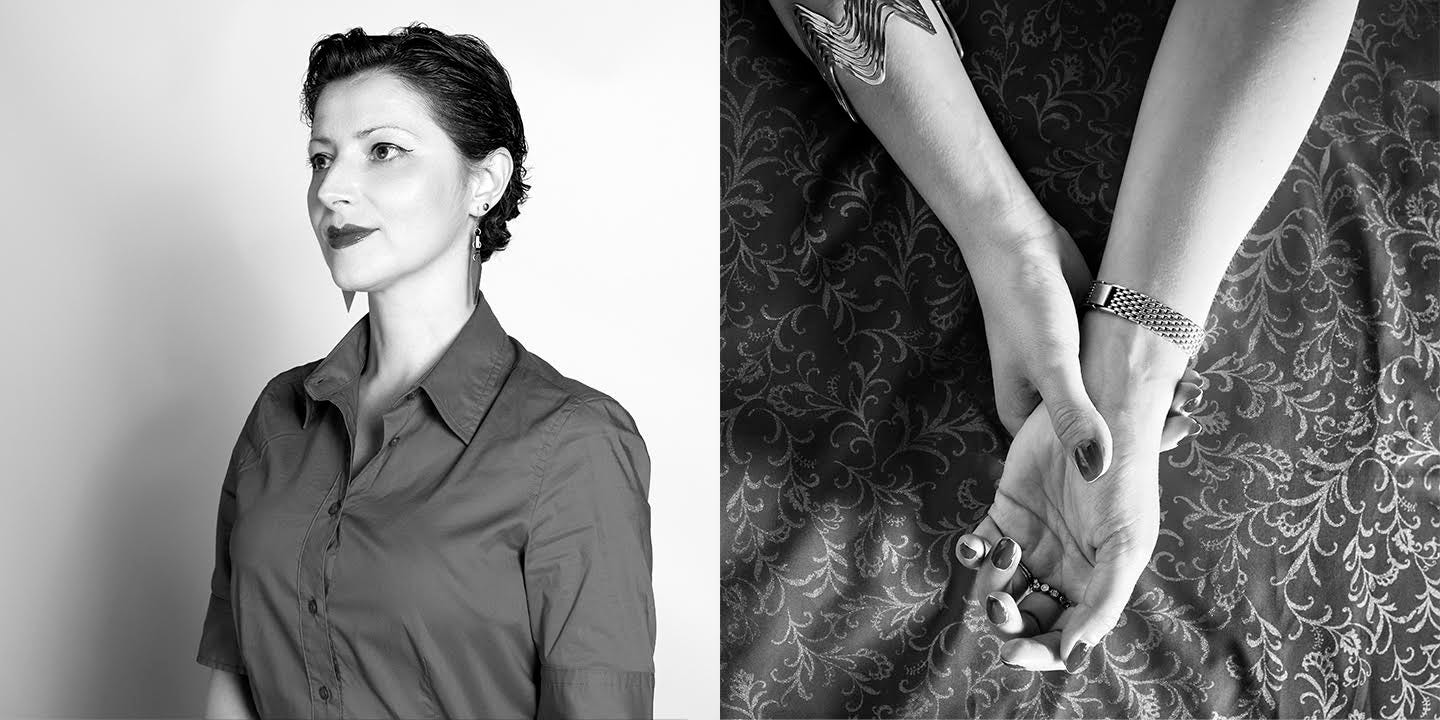
Photos by Tabitha Soren.
Only she and I know that on that black and white picture the feathers are golden and my red fingernail is about to come off. In fact, I’m sure she’s forgotten all about it. It’s only I who can’t quite get over it.
After seven chemo infusions, I was bald, with no eyelashes, no eyebrows and no energy. But I still had something in me that said fake it till you make it. Turns out people love fakers. We make everyone feel good! Our fellow fakers feel normalised, and those who are afraid of truth don’t have to face it. They take our fakery at face value.
My face had little value by the time I was done with the first part of my treatment. So it was just as well that I had to take some sick leave—the whole nine days—for surgery and disappear from the public eye for a couple of weeks. Already grey-faced—you can’t describe that colour as pale—following the surgery I was also scarred and in debilitating pain. Why didn’t they tell me it was going to be so sore? I guess they did. I guess I decided not to listen.
By the time I got a bit better and could function without prescription painkillers, I went to see my oncologist again.
‘Fourteen more infusions’, she said. Every three weeks.
Infusions? You mean like another incomprehensible cocktail of meds, right? No more chemo, right?
Hands shaking. Voice shaking. I look at her like a puppy who is ready to squeal. Who is also ready to bite her head off if she tells me I need to do another fourteen infusions of fucking chemo.
‘It’s not as bad as the first seven. Your hair won’t fall out. At least it shouldn’t. But it’s a type of chemo, yes.’
Fuck.
‘Most people tolerate it well.’
Jesus! Really? I can’t!
‘You’ll be fine. You’ll see.’
And so, every three weeks I went back to the chemo unit that I had come to know so well. She was right, I tolerated it better than the first seven infusions. I was sick only for the first few days after each one, and the fatigue allowed me to get out of bed. Most of the time. But every three weeks, on the day I was doing a blood test—I had to do it the day before the infusion because a cyberattack had left the phlebotomy department with what seemed like a permanent backlog—I would leave the hospital in hysterics. It was only after a few times that it occurred to me that I was probably suffering from a type of PTSD. Another needle in my arm, another dose of toxic poison that is keeping me alive long-term—I know and I am grateful!—but short-term is making me feel like shit.
The only thing that was harder than the chemo were the days in between my three-weekly infusions. In those days I had to be ‘normal’.
‘So glad you’re well now! You look great! We’ve been praying for you! So good it’s all over! Well done on getting through it!’
Most of the time I had no heart to tell them I was far from being through. So, I thanked them for their prayers—genuinely—and smiled—less genuinely—and said yeah, it’s good it’s over.
A dark corner. Wrap your arms around yourself. Like a soft silky sheet of fabric with golden feathers.
But everything ends. Unless it doesn’t. I took selfies at each infusion. At first, I counted them. And then I couldn’t be bothered. I marked them in my calendar among the work meetings and deadlines, and international travel. I pretended they were just another thing I needed to do, hoping that that would stop them doing things to me.
My life, sliced like a cake into three-weekly pieces, was passing. My hair was growing. I even had it cut a few times. And then an email popped up in my inbox:
‘Thank you for letting me take your picture earlier this summer. I apologise for how long it’s taken me to send them to you.’
From the fiery angel.
Last week I had my 21st chemo infusion. The last one, or—as my surgeon said when I asked him if I’d see him again—‘no, if you’re lucky’—the last one, if I’m lucky.
Just like after the first seven infusions, I rang the bell in the chemo unit, which has a sign below it: ‘Ring the bell and run like hell’, and I ran. For the second time. Will there be another bell? I don’t know.
The end is not the end.
‘A profile is a pose of power’, she says. I find it odd to pose like that. The only thing I like about power poses is subverting them. But I sit still and look at the spot her assistant tells me to look at so I appear like a Caesar, or a king, or whatever. Regal. And then she says: ‘you can look into the lens now.’ And I do. ‘You can smile if you want.’ And I do.
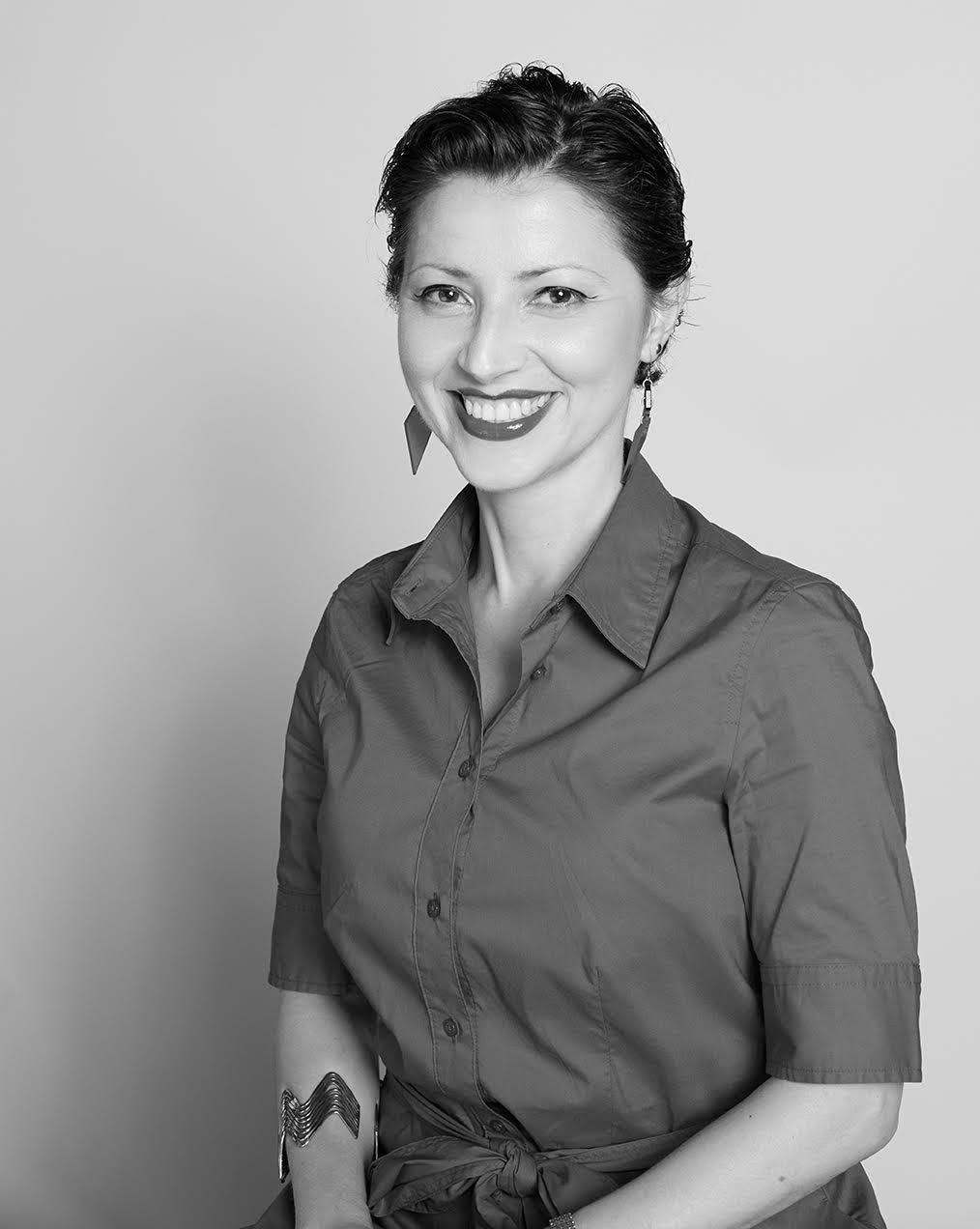
Photo by Tabitha Soren.
London, 1 November 2025
Since I was diagnosed with breast cancer in the spring of 2024, I’ve been documenting my treatment journey through reflections on Wounds and Words. You can read my earlier pieces below. I hope they help some readers feel a little less alone in their experience or encourage to share their own stories with others. A pain shared is a pain halved? Not sure about that. But perhaps a pain shared is a pain normalised. Thank you for reading.

You look fabulous. But by writing this, you show that you're beautiful inside. And Brave!
💙🙏💛🇺🇦💙🙏💛